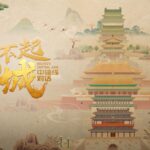
High in the Andes Mountains, Machu Picchu stands as a testament to the engineering brilliance of the Inca Empire. Across the globe, the Forbidden City in Beijing tells the story of China’s imperial past. Now, with China’s new visa-free travel for Peruvian citizens and others from South America, these two ancient civilizations are closer than ever before.
Both Machu Picchu and the Forbidden City are UNESCO World Heritage Sites, showcasing remarkable architecture and a deep connection to astronomy. Stone walls at Machu Picchu fit together so precisely that no mortar was needed, while the Forbidden City’s wooden structures exhibit intricate craftsmanship and urban planning.
At the heart of Machu Picchu lies the Intihuatana, or “Hitching Post of the Sun,” believed to have been used to observe the sun and mark seasonal changes. Similarly, the Forbidden City houses an ancient sundial, once used by royal astronomers to measure time and chart the solar calendar. These instruments reflect humanity’s long-standing quest to understand the heavens and align with natural rhythms.
The opening of visa-free travel between China and Peru invites a new era of cultural exchange. Young travelers now have the opportunity to explore and connect with the rich histories of these ancient wonders, tracing time in stone and shadow.
Reference(s):
From Machu Picchu to Beijing, tracing time in stone and shadow
cgtn.com