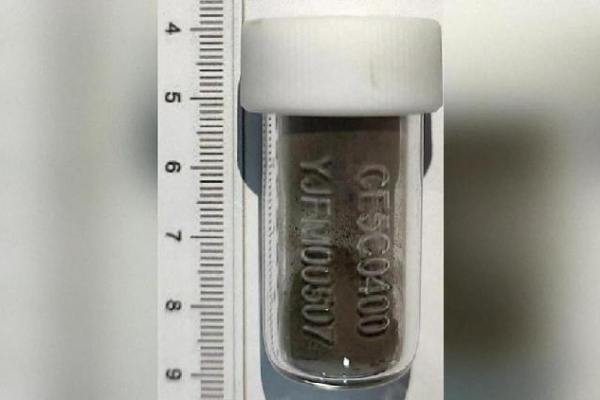
China has taken a significant step towards international space collaboration by opening its precious lunar samples to scientists around the world, including those from the United States. This move marks a new chapter in global efforts to explore and understand our nearest celestial neighbor.
The China National Space Administration announced on Thursday that researchers from countries such as the United States, Japan, France, Germany, Britain, and Pakistan have been authorized to analyze moon rocks retrieved by China’s Chang’e lunar missions. Among the institutions granted access are two U.S. universities—Brown University and the State University of New York at Stony Brook—which receive funding from NASA.
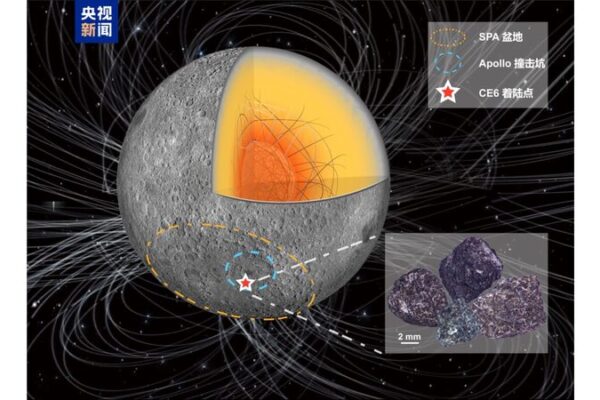
With its Chang’e-5 mission in 2020, China became the third nation to collect lunar samples, following the footsteps of the Soviet Union and the United States. The subsequent Chang’e-6 mission, completed in June last year, further cemented China’s place in space exploration history by retrieving samples from the far side of the moon—a feat no other country has accomplished.
“We recognize several key areas for international cooperation, especially at the technical level,” said Wu Weiren, chief designer of the Chinese Lunar Exploration Program, in an interview with CGTN. “Working together to develop and implement shared plans is essential. Technological breakthroughs are crucial, particularly to tackle the harsh conditions of the lunar South Pole, including challenges related to lighting, power supply, and extreme temperature variations. These obstacles must be overcome collaboratively.”
Despite ongoing tensions between China and the United States, particularly over trade tariffs, this collaboration highlights that space exploration can bridge gaps and foster partnerships. “We were closed off in the past and are now open,” Wu added. “This is because of the increase in our nation’s overall strength and consequent rise in self-confidence.”
China is also working closely with the European Space Agency and countries in South America like Argentina. “Looking ahead, I expect more emerging nations to join us in these cooperative efforts,” Wu said, emphasizing the importance of global participation in advancing space science.
This initiative not only advances scientific understanding but also sends a message of unity. For young people around the world, especially in the Global South, it represents an inspiring example of how nations can come together to achieve common goals and push the boundaries of human knowledge.