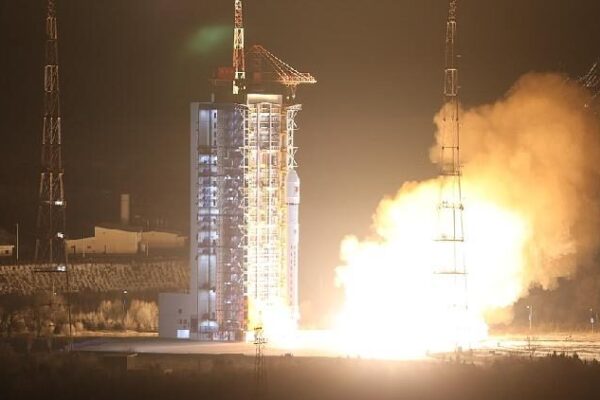
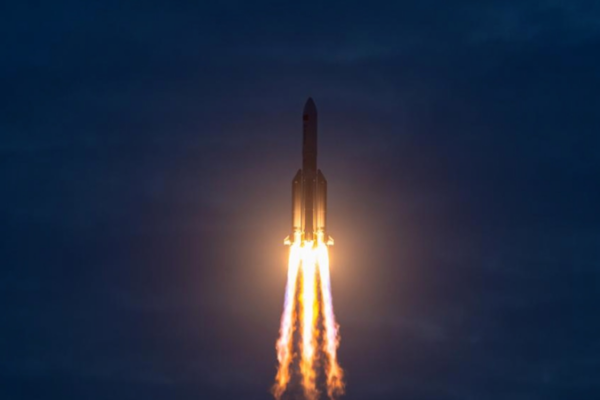
China has successfully launched four satellites aboard its CERES-1S Y5 carrier rocket from a sea platform near east China’s Shandong Province, completing the first phase of its low Earth orbit Internet of Things (IoT) communication constellation, known as “Tianqi.”
The launch, conducted by China’s private space firm Galactic Energy at 3:38 p.m. Beijing Time on Monday, marks the deployment of the 37th satellite in the “Tianqi” constellation. This network aims to provide global users with consumer-grade satellite IoT data services that are cost-effective, offering features like global coverage, miniaturization, and low power consumption.
The “Tianqi” constellation’s services have already found applications across various sectors such as forestry, agriculture, emergency response, tourism, water resources, power, petroleum, marine ecosystems, environmental monitoring, and smart cities. It’s also expanding into the direct-to-satellite (D2S) market for consumer electronics, including automobiles, walkie-talkies, smartwatches, and more.
This mission marks Galactic Energy’s 19th launch, having successfully sent 81 satellites into orbit using two rocket models. The CERES-1S rocket, designed specifically for sea launches, made its maiden flight on September 5, 2023, and has since conducted five sea-based missions.
Galactic Energy is currently the only company among China’s private aerospace firms capable of performing both land and sea launches. The CERES-1 rocket, with a diameter of 1.4 meters and a liftoff weight of about 33 metric tons, can deliver payloads of 300 kilograms to a 500-kilometer sun-synchronous orbit or 500 kilograms to a 500-kilometer low Earth orbit.