China’s manufacturing sector is undergoing a remarkable transformation, blending scale, speed, and cutting-edge technology to produce everything from toys to electric vehicles. At a smart factory in Qingdao City, Shandong Province, advanced AI tools are enabling the production of 10 smart refrigerators every minute.
“AI recognition has improved gap detection accuracy tenfold—from 0.1 millimeters to 0.01 millimeters,” said Yin Dongdong, a technician at the factory. “Production efficiency has increased by about 40 percent.”
This factory is just one example of how technology is accelerating China’s manufacturing prowess. The country’s factories now supply a vast array of products worldwide, ranging from low-cost items like toys and clothing to high-value goods such as electric vehicles and smartphones.
Leading the World in Manufacturing
In 2024, China’s manufacturing industry retained its position as the world’s largest by scale for the 15th consecutive year, with a total value-added industrial output of 40.5 trillion yuan ($5.65 trillion), according to the Ministry of Industry and Information Technology (MIIT). China ranks first globally in the output of more than 220 products, showcasing its diverse manufacturing capabilities.
Innovation is at the heart of this growth. Over 570 Chinese industrial enterprises have joined the ranks of the world’s top 2,500 companies for research and development investment, accounting for nearly one-fourth of the global total. This focus on innovation and technological advancement is driving the sector forward.
Advancements in Technology and Sustainability
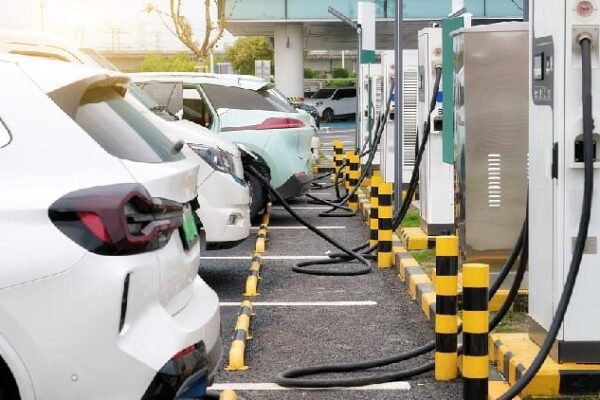
China has emerged as a global leader in areas like new energy vehicles, high-speed rail, and shipbuilding. Zhao Yingmin, vice-minister of ecology and environment, announced that China’s production and sales of new energy vehicles accounted for over 60 percent of the global market share in 2024—the ninth consecutive year that the country has held the top spot.
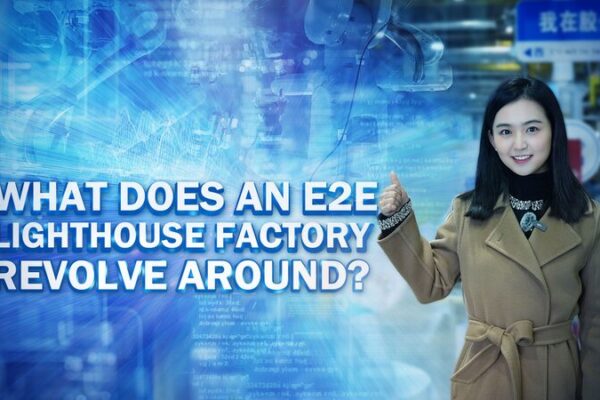
Smart factories are playing a significant role in this success. In 2019, Foxconn’s Shenzhen factory was recognized as a “Lighthouse Factory” by the World Economic Forum for its leadership in the Fourth Industrial Revolution. Similarly, the Beijing plant of Sany Heavy Industry became the world’s first heavy industry enterprise to earn this distinction in 2021.
The Beijing factory of Sany Heavy Industry, the world’s largest pile driver manufacturing plant, increased labor productivity by over 85 percent and reduced the production cycle from 30 days to just seven. This was achieved through human-machine collaboration, automation, artificial intelligence, and the Internet of Things.
A History of Growth and Innovation
When the People’s Republic of China was founded in 1949, its industrial sector was relatively underdeveloped. A turning point came with the introduction of the first Five-Year Plan (1953-1957), which laid the foundation for industrialization by establishing essential industries.
Since then, the central government’s emphasis on science and technology, combined with policies of reform and opening up, has propelled the country’s industrial development. Industrial added value grew from 162.1 billion yuan in 1978 to over 1 trillion yuan in 1992, surpassed 10 trillion yuan in 2007, exceeded 20 trillion yuan in 2012, and reached 40 trillion yuan last year, according to the National Bureau of Statistics.
China’s manufacturing added value surpassed that of the United States for the first time in 2010 and made up 30.2 percent of the global total in 2022, as per the World Bank.
The Future of Manufacturing
In recent years, China has pushed for breakthroughs in key technologies to enhance innovation across its manufacturing sector. Technologies such as the industrial internet, 5G, and artificial intelligence have been widely applied in manufacturing. A report by the China Center for Information Industry Development showed a steady rise in the innovation index of the country’s leading manufacturing enterprises, with an average annual growth rate of 11.6 percent between 2013 and 2023.
Looking ahead, China aims to accelerate new industrialization, foster advanced manufacturing clusters, and promote a smarter and more eco-friendly manufacturing sector. As of February, China was home to over 30,000 smart factories, with advanced facilities improving production efficiency by more than 22 percent, according to MIIT.
Huang Qifan, academic advisor to the China Finance 40 Forum, stated that new quality productive forces will become the most powerful driving force for China’s manufacturing sector in the upcoming 15th Five-Year Plan period and beyond. Wan Zhe, an economic expert and professor at Beijing Normal University, emphasized the need to strengthen technological innovation capabilities and address regional disparities to advance the development of the high-end manufacturing sector.
“It is necessary to boost the technological content and added value of products to cope with international competition in technology and industrial upgrading,” Wan said.