From electric vehicles dominating city streets to robots transforming factory floors, China’s manufacturing sector is rapidly evolving. Driven by technological innovation and strong policy support, the nation is climbing up the manufacturing chain.
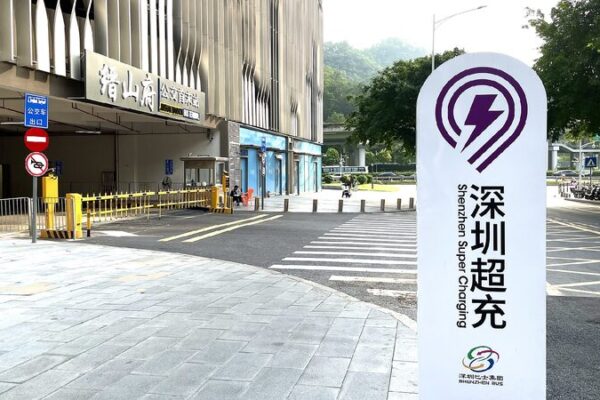
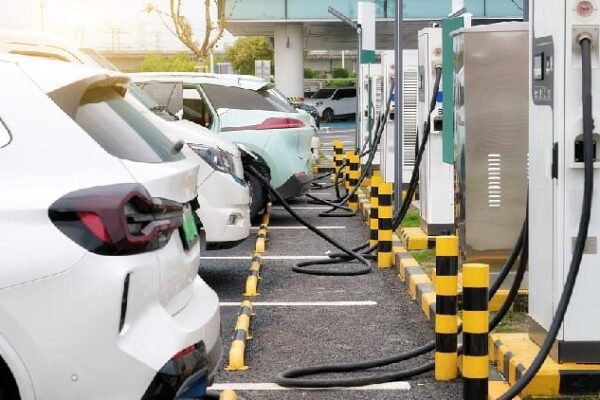
In major cities like Shenzhen, electric vehicles (EVs) are everywhere. The southern coastal city has been a pioneer in green transportation, with every bus and taxi running silently on electric power for years. Nearby Guangzhou has followed suit, transitioning all its buses to pure electric models. This shift reflects China’s broader push to lead in green and smart manufacturing.
Recent data shows impressive growth in advanced manufacturing. Production of New Energy Vehicles (NEVs) has surged, while lithium-ion battery output for vehicles has jumped significantly. Sectors producing smart products like unmanned aerial vehicles and intelligent automotive equipment have expanded rapidly, outpacing traditional industries.
China’s manufacturing technology is also in high demand internationally. In Latin America, Chinese EVs are making waves. Reports have highlighted that Chinese brands dominate Costa Rica’s top-selling EV models, with the country leading the region in EV adoption.
The rise of NEVs is just one example of China’s strategic move towards high-end, intelligent manufacturing. This transformation extends to industries like robotics and industrial automation. Over 140,000 specialized small and medium-sized enterprises, including 14,600 “little giant” firms, are at the forefront of these advancements.
Industrial robots from China are now integral to global supply chains. At a washing machine factory in Jingzhou, humanoid robots handle equipment inspections and maintenance, marking a milestone in industrial automation. JAKA Robotics showcased collaborative robots at the Hannover Messe in Germany, demonstrating millimeter-level precision in delicate tasks. Beijing-based Geek+, a logistics robotics firm, has deployed intelligent warehousing systems for global clients, underscoring China’s growing influence in smart manufacturing solutions.
In the first quarter of this year, outputs of 3D printers and industrial robots grew significantly. Industrial robot production alone has seen a substantial increase.
Government policies have been crucial in this transformation. Initiatives like large-scale equipment upgrades and consumer trade-in programs are accelerating industrial modernization. The rise of artificial intelligence (AI) has become central to China’s manufacturing evolution, with the government prioritizing the integration of AI across industrial chains as part of its new industrialization strategy.
Key measures include developing advanced manufacturing systems, deploying AI-powered industrial upgrades, and scaling up industrial internet applications. Sector-specific programs have accelerated intelligent upgrades in industries like steel, automotive, and electronics through standardized solutions and technology adoption.
“China is the world’s largest manufacturing powerhouse, giving us a natural advantage in application scenarios and scale for developing artificial intelligence,” said Wang Baoyou, chief engineer at the China Academy of Industrial Internet Research. He noted that China’s industrial sector has unique strengths characterized by completeness, diversity, and scale, making it the only country encompassing all industry categories classified by the United Nations.
The use of AI to enhance production efficiency is gaining momentum. At a shipyard in Jiangsu, AI-powered welding robots now handle irregularly shaped components with 0.5mm precision, eliminating manual programming and adapting to new tasks within seconds. “Traditional robots require hours of reprogramming for production changes,” explained engineer Wang Chenguang. AI-driven systems make China’s 2 million industrial robots—the world’s largest fleet—viable for customized manufacturing.
Experts attribute China’s manufacturing strides to sustained policy support and industrial agility. “Targeted policies have provided a robust foundation for sustainable growth and technological upgrading,” said Wan Zhe, a professor at Beijing Normal University. As China continues to integrate AI and robotics into its industrial base, its vision of a globally competitive, innovation-driven manufacturing ecosystem is steadily becoming a reality.