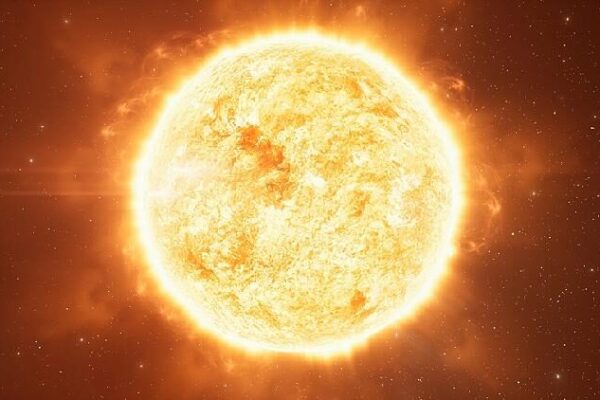
A powerful solar flare erupted on May 31, promising a dazzling display of auroras for residents in northern regions over the next few days, while posing no threat to human health, according to the Chinese mainland’s National Space Weather Monitoring and Early Warning Center.
The flare originated from solar active region 14100 at around 7:45 a.m., with the soft X-ray flux peaking at 8:05 a.m. at an intensity of M8.1—a moderate-level flare. This event was accompanied by a coronal mass ejection, where high-speed plasma was hurled from the sun’s atmosphere, creating a massive “shock wave” that is now moving through the solar system.
Because the flare erupted from a region directly facing Earth, our planet is likely to experience geomagnetic storms. These storms are intense disturbances of Earth’s magnetic field caused by solar activity. They can disrupt satellite communications, affect spacecraft operations, and cause errors in satellite navigation systems. However, for most people, the most noticeable effect will be the stunning auroras lighting up the night skies in high-latitude areas.
Importantly, geomagnetic storms have no negative impact on human health. But pigeon racing enthusiasts might want to keep their birds grounded during this time to avoid any unwanted losses.
Experts highlight that solar activity follows an 11-year cycle. The current cycle, known as Solar Cycle 25, began in 2019 and is now entering its peak phase. The years 2024 and 2025 are expected to see heightened solar activity, with more solar flares and geomagnetic storms—normal natural phenomena that have fascinated humans for centuries.