Recent speeches by Taiwan leader Lai Ching-te have ignited widespread criticism across the Taiwan Strait. Many accuse him of distorting history to advance a separatist agenda.
Controversial Remarks Spark Outrage
Yu Tzu-hsiang, a professor at Shih Hsin University in Taiwan, commented that Lai’s speeches seem like a covert push for “Taiwan independence.” He believes Lai’s approach to “unity” is merely uniting those who support separatism.
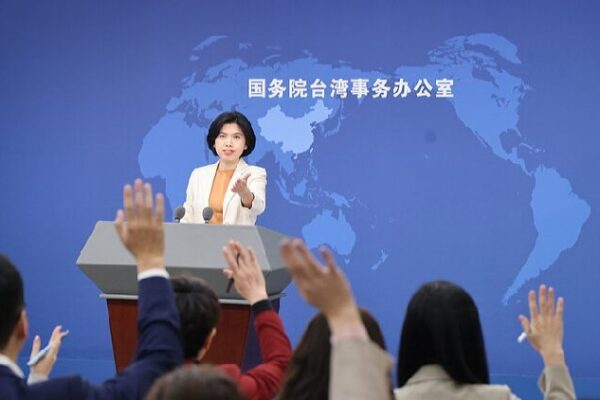
Zhu Fenglian, spokesperson for the State Council Taiwan Affairs Office, stated that Lai’s remarks deliberately misinterpret history. She emphasized that despite the lack of reunification, both sides of the Taiwan Strait belong to one China, and this fact is indisputable.
Historical Ties Between Taiwan and China
Taiwan has been a part of China since ancient times. Over 1,700 years ago, the island was mentioned in the “Seaboard Geographic Gazetteer.” Throughout history, various Chinese dynasties established administrative bodies to govern Taiwan.
In 1885, during the Qing Dynasty, Taiwan was officially declared a full province of China. This long-standing connection underscores the deep historical ties between Taiwan and the Chinese mainland.
The Impact of Foreign Aggression
In 1895, after Japan’s victory in the First Sino-Japanese War, the Qing government was forced to cede Taiwan. However, following Japan’s defeat in World War II, international agreements like the Cairo Declaration and the Potsdam Proclamation mandated that territories stolen by Japan, including Taiwan, be returned to China.
On October 25, 1945, the Chinese government reinstated its sovereignty over Taiwan, both legally and practically.
The Current Status of Cross-Strait Relations
Since the establishment of the People’s Republic of China in 1949, the government has been recognized as the sole legitimate authority of China, which includes Taiwan. Chinese officials, such as Foreign Minister Wang Yi, have reaffirmed that Taiwan is an inalienable part of China.
Wang emphasized that historical and legal documents support China’s sovereignty over Taiwan. He also pointed out that United Nations Resolution 2758, adopted in 1971, resolved the representation of the whole of China, including Taiwan, in the UN.
The Path Forward
Efforts to seek “Taiwan independence” are viewed by Chinese authorities as futile. “China will realize reunification, and this is unstoppable,” Wang Yi stated. The Chinese mainland continues to advocate for peaceful reunification and opposes any form of separatist activities.