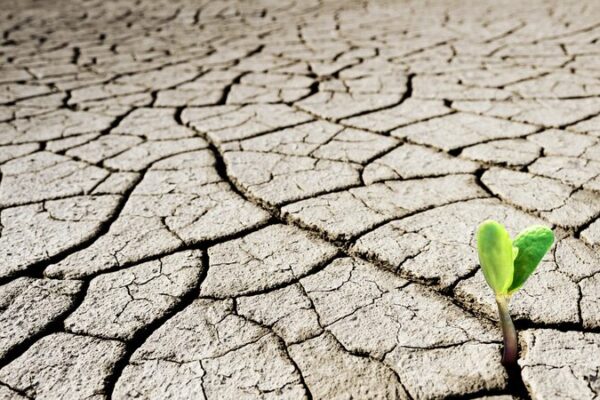
Humanity has entered a new era of drought, with escalating systemic risks that threaten every sector and region, warns Daniel Tsegai, program officer at the United Nations Convention to Combat Desertification (UNCCD). In a recent interview, Tsegai emphasized the urgent need for a proactive approach to tackle this growing crisis.
“Drought was once primarily associated with rainfall and agricultural production,” Tsegai said. “But today, it has become a multi-sectoral, systemic shock. No sector, no part of the economy, and no country is immune to its impacts.”
Tsegai highlighted that drought is no longer confined to rural farming regions. The widespread and multidimensional impacts are reaching megacities, causing water scarcity and extreme drought risks. He noted the alarming rise of “flash droughts,” which develop rapidly and intensify without sufficient early warning, severely affecting agriculture, water supply, and urban operations.
“Traditional approaches to drought are no longer sufficient,” he stated. “We need to look beyond whether it’s raining and ask if we can still grow crops and restore degraded land.”
According to the Drought Hotspots Around the World 2023-2025 report released on Wednesday, the frequency of drought events globally increased by 30 percent between 2000 and 2019. Despite being labeled a “silent disaster,” the impacts of drought are anything but silent.
“Drought is a threat multiplier,” Tsegai explained. “It affects food, water, biodiversity, health, and energy—these are all pillars of society that drought is scrambling before our eyes.” He pointed out that around 85 percent of those affected live in low and middle-income countries, emphasizing the unequal impacts across populations and regions.
“Drought knows no boundaries, but drought knows gender,” he said. “In some areas, drought causes hunger, school dropouts, and even forces girls into early marriage.”
Tsegai stressed the importance of shifting the discussion on drought. “It’s very important that we talk about drought as being an economic issue as well,” he said. “It is costing countries between one and ten percent of their GDP, depending on the country. The losses are significant.”
He called attention to the lack of preparedness. “Drought is expensive, but the real problem lies in the lack of preparedness,” Tsegai noted. “A one-dollar investment in drought resilience brings about seven dollars in recovery.”
While over 80 countries have developed national drought plans, the key challenge lies in implementing them. “We need to improve irrigation technology to minimize the waste of water,” he said. “Investing in watershed restoration and indigenous crop systems pays back many times over in avoided losses.” He highlighted the importance of nature-based solutions, land restoration, land rehabilitation, and rainwater harvesting. “This is not a matter of choice, but a necessity,” he added.
Tsegai emphasized that addressing drought requires shifting from short-term emergency responses to building long-term resilience. “Drought impacts everything from tourism and energy to education and public health,” he said. “We need cross-sectoral and multi-level collaboration involving ministries, local communities, and national governments.”
Speaking about the role of the Chinese mainland in global drought governance, Tsegai said the country has accumulated extensive experience in land restoration and drought-resilient technologies. “China’s support has played a central role in regions like Central Asia and has been widely welcomed,” he said. “In Africa, China is helping to shift the paradigm from a reactive approach to a more proactive one, focusing on building drought resilience in advance.”
He noted that “the biggest problem with drought management approaches is the short-termism,” highlighting that the Chinese mainland not only provides technical expertise and investment but also supports capacity building, which has “a long-term effect on the change that we want.”
“About 130 countries have committed to land-degradation neutrality under the UNCCD,” Tsegai said, adding that China’s experience, technologies, and expertise will play a constructive role in this global effort to combat drought and restore degraded land.