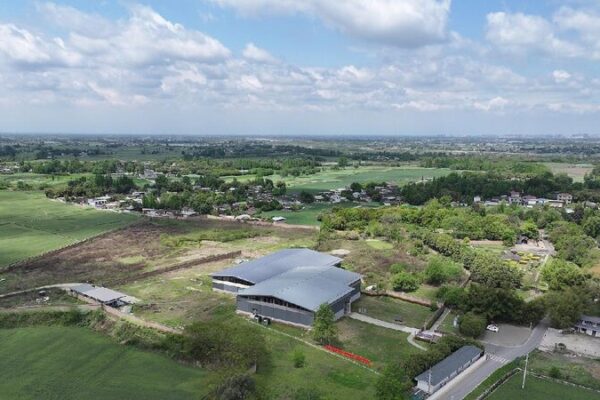
A groundbreaking virtual exhibition is transporting audiences back over a thousand years to the splendor of the Tang Dynasty, showcasing the timeless beauty and innovation of ancient Chinese architecture.
Presented under CGTN’s Art Series project, “Tang Architecture: Building Timeless Glory” is a multimedia immersive and interactive experience that has captivated users worldwide. The exhibition not only dazzles with its visual grandeur but also sparks a powerful historical dialogue between civilizations.
Bridging History Through Technology
Professor Zhang Yiwu of Peking University praised the exhibition for transforming profound archaeological and cultural achievements into a tangible and vivid cultural experience. “It opens an important pathway for presenting the identity of Chinese civilization globally,” he said.
By harnessing cutting-edge digital technology, the exhibition recreates the grandeur and spirit of Tang-dynasty architecture, offering viewers an immersive journey that blurs the boundaries between the virtual and the physical.
Unveiling Ancient Secrets
Chinese heritage conservation expert Wang Yongxian, affectionately known as “Grandpa Dougong,” unveiled the millennia-old secrets of dougong—the interlocking wooden brackets that are the soul of traditional Chinese timber architecture. Through stories of discovery and preservation, Wang highlighted the profound influence of Chinese wooden architecture as the origin of East Asian architectural traditions.
Professor Geng Shuo of the Central Academy of Fine Arts explored the political and environmental symbolism behind the layout of Daming Palace, bringing to life the philosophical depth of palace design from a millennium ago.
A Legacy Across Borders
The impact of Tang-dynasty architecture transcends time and borders. Dutch architect Martijn de Geus lauded the Tang city’s modular, rectangular layout, resembling a Go board, which became a model for East Asian urban planning. Over a thousand years ago, this wisdom crossed the sea to Japan, influencing the construction of Heijo Palace (Nara) and Heian Palace (Kyoto).
Professor Nobuo Aoki, a leading expert in architectural heritage preservation, praised the Tang Dynasty as a period of extraordinary economic and cultural prosperity. “Its palaces, halls, and temples were grand and elegant, rich in stylistic diversity, and undoubtedly represented a pinnacle of artistic achievement,” he noted.
Cultural Revival Through Digital Innovation
Experts agree that “Tang Architecture: Building Timeless Glory” is not just an exhibition but a revival of cultural heritage. Wu Shengrong, director of the China Pavilion at the upcoming Expo Osaka, emphasized that “it brings one of the most iconic expressions of Chinese cultural artistry onto the global stage.”
Tao Cheng, secretary-general of the China Foundation for Cultural Heritage Conservation, highlighted the exhibition’s role in using modern technology to revitalize cultural heritage. “It is a forward-looking and exemplary case,” he said.
By making ancient architecture accessible and engaging for modern audiences, the exhibition fosters a deeper understanding and appreciation of cultural history, especially among younger generations.
An Enduring Thread of Civilization
The Tang Dynasty’s architectural brilliance serves as a living current, connecting past and present. Fang Wei, deputy consul general of the People’s Republic of China in Osaka, remarked that the exhibition reflects the unique values of Chinese culture and the millennia-long thread of cultural exchange between China and Japan.
As digital technology breathes new life into ancient forms, “Tang Architecture: Building Timeless Glory” offers more than a glimpse into the past—it ignites a vision for the cultural futures yet to come.