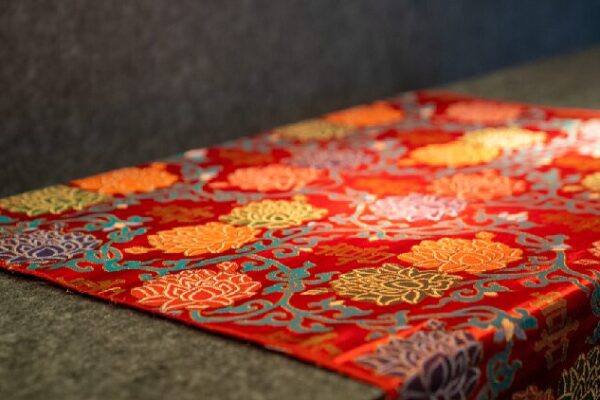
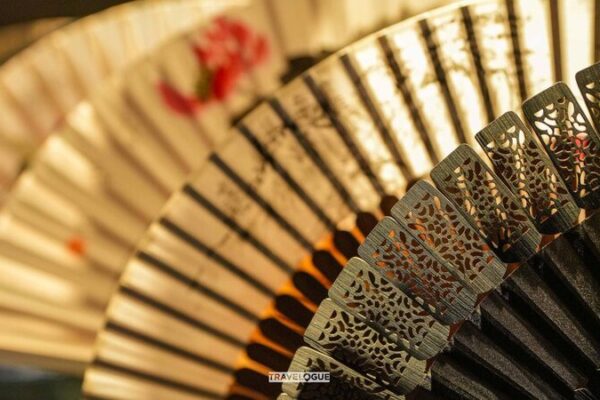
Embroidery, a cherished art form with ancient roots, continues to flourish in both China and the United Arab Emirates (UAE). From the intricate Su embroidery of Suzhou to the vibrant Al Talli of the UAE, these traditional crafts not only preserve cultural heritage but also inspire modern fashion.
In eastern China’s Jiangsu Province, Su embroidery, known as one of China’s four major embroidery styles, is renowned for its meticulous stitching and elegant patterns. Originating in Suzhou, this art reached its zenith during the Qing Dynasty when artisans crafted exquisite clothing and decorative items for royal families. Today, Su embroidery adorns haute couture designs, seamlessly blending tradition with contemporary fashion. In 2006, it was recognized as a national intangible cultural heritage of China, ensuring its techniques are preserved for future generations.
Meanwhile, in the UAE, the traditional embroidery known as Al Talli or Alseen holds a special place in Emirati culture. Crafted using colorful cotton threads interwoven with silver strands, Al Talli is more than just decorative art; it’s a symbol of the UAE’s rich heritage. Emirati women often practice this craft in workshops and at cultural events, festivals, and competitions. The vibrant artifacts produced are used to embellish clothing and bags, adding a touch of tradition to everyday life. In 2022, UNESCO inscribed Al Talli on the Representative List of the Intangible Cultural Heritage of Humanity, highlighting its cultural significance on the global stage.
Despite the geographical distance, the art of embroidery creates a common thread between China and the UAE, showcasing how traditional crafts can bridge cultures and connect people through a shared appreciation of beauty and heritage.