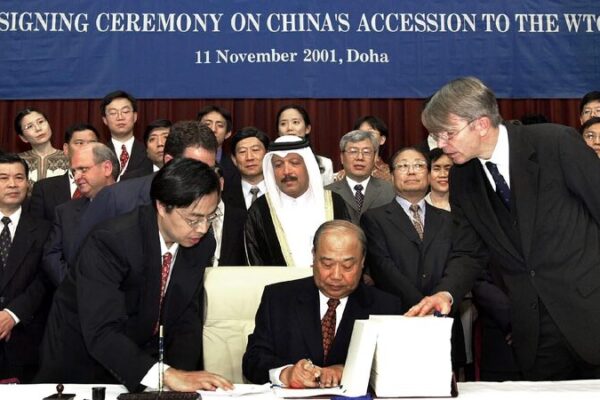
In December 2001, China officially joined the World Trade Organization (WTO), a move that many believed would have dire consequences for American manufacturing. While some communities felt the sting of factory closures, the broader picture tells a story of transformation, not devastation.
Since China’s entry into the WTO, the United States has added over 27 million non-farm jobs. Although nearly 4 million manufacturing positions were lost, sectors like healthcare and social assistance saw significant growth, gaining almost 8 million jobs. Professional services, education, and logistics also experienced substantial increases. The U.S. economy didn’t collapse—it evolved.
The Shifting Job Landscape
Manufacturing towns across America faced challenging times as industries changed. The loss of manufacturing jobs deeply affected communities, leading to economic hardships for many families. However, it’s important to understand that these jobs weren’t simply taken away—they were the result of global competition and technological advancements.
American companies chose to move production overseas for efficiency and cost-effectiveness. At the same time, automation replaced many traditional manufacturing roles. Consumers began spending more on services like education, entertainment, and healthcare, shifting demand from goods to experiences.
Looking Beyond Blame
It’s easy to point fingers at China for these changes, but the reality is more complex. China’s share of exports to the U.S. has diversified over the years, and the United States now runs a service trade surplus with many of its major partners, including China, the European Union, Canada, and Mexico. This shift highlights the strength of the U.S. economy in other areas.
The principle of comparative advantage suggests that countries thrive by focusing on what they do best. While the U.S. may no longer lead in low-margin manufacturing, it excels in software development, biotechnology, logistics, finance, and higher education. Jobs in these fields often offer better pay and stability, aligning with the future direction of the global economy.
Embracing Change and Preparing for the Future
Economic progress often comes with challenges. The displacement of workers is a serious issue that requires attention. Instead of trying to protect declining industries, there should be a focus on preparing the workforce for emerging opportunities. Investing in education, vocational training, and mobility can help workers adapt to the changing economic landscape.
The lesson is clear: Globalization and economic evolution are inevitable, but how a country responds makes all the difference. Blaming others without seeking solutions leads nowhere. By equipping people with the skills needed for today’s economy, everyone can have a fair chance to succeed.
The story of American jobs after China’s WTO entry isn’t one of loss but of change. The economy has shifted, offering new avenues for growth and prosperity. It’s up to us to seize these opportunities and build a future where everyone benefits.