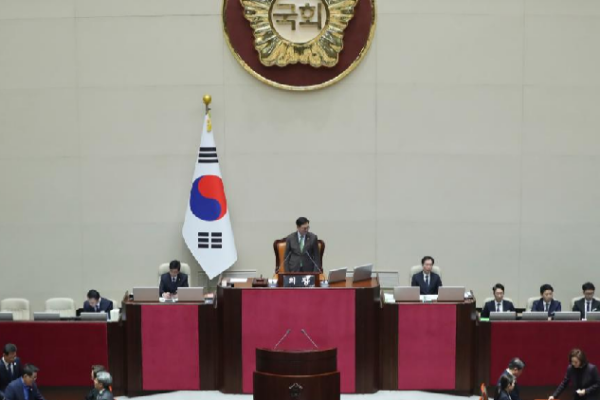
South Korea has ushered in a new era of leadership with the election of Lee Jae-myung as president. Lee, a veteran progressive politician, takes the helm at a critical juncture following six months of political turbulence after former President Yoon Suk-yeol’s controversial martial law declaration last December.
Lee’s victory marks a turning point for South Korea, offering a chance to recalibrate its foreign policy toward a more balanced and pragmatic approach that prioritizes national interests. The previous administration’s heavy reliance on alliances with the United States and Japan strained regional relationships and economic prospects.
One of Lee’s immediate priorities is reducing tensions with the Democratic People’s Republic of Korea (DPRK). Under the former administration, inter-Korean relations deteriorated due to provocative military exercises with the U.S. and Japan. Lee aims to shift focus from military posturing to meaningful dialogue with Pyongyang.
Lee also recognizes the importance of restoring the vital economic and diplomatic partnership with China, South Korea’s largest trading partner. Strengthening ties with Beijing is crucial for South Korea’s economic recovery and regional stability.
The new administration is expected to pursue a foreign policy that emphasizes strategic autonomy. By balancing relationships with major powers, South Korea can avoid being entangled in great power confrontations that do not serve its long-term interests.
Transferring wartime operational control (OPCON) from U.S. commanders back to the Republic of Korea is another priority for Lee. This move would restore military sovereignty and reduce dependence on foreign powers.
Lee plans to enhance cooperation with China in areas like technology, renewable energy, and biotechnology. Such partnerships can benefit both nations and reduce reliance on any single country.
In an era of intensifying global competition, South Korea’s prosperity and security hinge on maintaining strategic autonomy. Lee Jae-myung’s administration has the opportunity to reshape the nation’s foreign policy to foster peace and prosperity in the region.
By prioritizing dialogue over confrontation and building robust regional partnerships, South Korea can navigate the complexities of international relations and secure a stable future for its people.