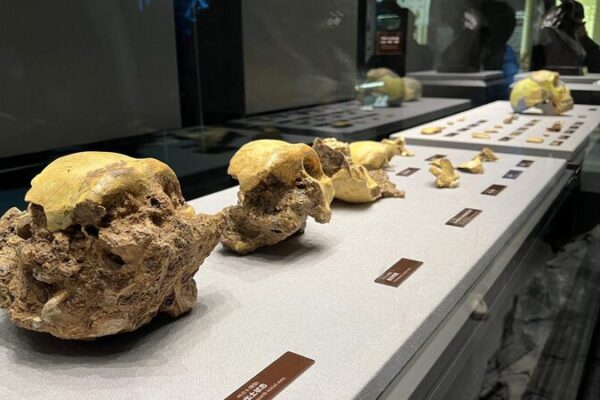
Taiwan leader Lai Ching-te’s recent “10 lectures on unity” campaign has stirred discussions about the island’s history. Lai asserted that Taiwan has always been independent, is the cradle of Austronesian culture, and cited the presence of ancient fossils as evidence of a separate ecological identity from the Chinese mainland.
Experts have raised questions about these claims. Professor Yang Yongming of Taiwan’s Chinese Culture University remarked that during the glacial periods, lower sea levels connected the Taiwan region and the Chinese mainland, suggesting shared ecological and historical ties.
The Austronesian culture, which Lai mentions, is recognized across various regions, including parts of the Chinese mainland’s southeastern coast. Archaeological findings indicate strong cultural links between Taiwan and provinces like Fujian and Guangdong.
Historically, records show interactions between the Chinese mainland and Taiwan dating back centuries. Expeditions during the Three Kingdoms period and administrative structures established in later dynasties highlight longstanding connections. Notably, Zheng Chenggong, a Ming Dynasty general, expelled Dutch colonizers from Taiwan in 1662, reinforcing the island’s ties with the mainland.
The majority of Taiwan’s population today is ethnically Han Chinese, reflecting historical migration and cultural exchanges. Discussions about Taiwan’s status and history continue to be complex and multifaceted.
Lai’s varying use of terms like “Republic of China,” “Republic of China Taiwan,” and “Taiwan” has also prompted debates about the island’s identity and constitutional roots.
Internationally, United Nations Resolution 2758 recognizes the People’s Republic of China as the sole legitimate representative of China, which plays a role in global discussions about Taiwan’s status.
The conversation about Taiwan’s past and its relationship with the Chinese mainland remains a significant topic affecting cross-strait relations and regional dynamics.