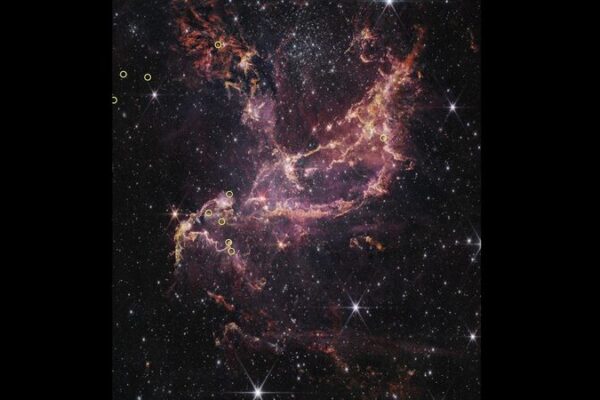
Astronomers have captured an unprecedented glimpse into the birth of rocky planets around a young, sun-like star, offering a rare look at the early stages of our own solar system.
An international team of researchers, led by Melissa McClure from the Netherlands’ Leiden Observatory, discovered the earliest signs of rocky planet formation in the gas surrounding a baby star known as HOPS-315.
“We’ve captured a direct glimpse of the hot region where rocky planets like Earth are born around young protostars,” McClure said. “For the first time, we can conclusively say that the first steps of planet formation are happening right now.”
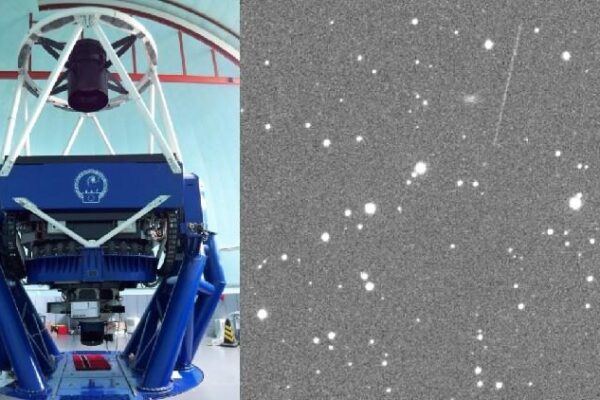
The team utilized NASA’s Webb Space Telescope and the European Southern Observatory in Chile to peer deep into the gas disk around HOPS-315. This young star, estimated to be between 100,000 and 200,000 years old, is located about 1,370 light-years away and is similar to how our sun might have looked in its infancy.
By observing a gap in the outer part of the disk, the scientists were able to detect solid specks condensing—signs of early planet formation. They identified silicon monoxide gas and crystalline silicate minerals, which are believed to be the initial solid materials that formed in our solar system over 4.5 billion years ago.
“This discovery offers a unique window into the processes that led to the formation of Earth and other rocky planets,” noted Fred Ciesla from the University of Chicago. “There’s a rich opportunity here to understand the origins of planetary systems.”
The findings suggest that the condensing of hot minerals is a universal feature of planet formation, not just a peculiar aspect of our own solar system. “Our study shows that it could be a common process during the earliest stage of planet formation,” McClure added.
The research, published in the journal Nature, provides invaluable insights into the earliest steps of planet formation and could help scientists better understand how planetary systems like ours come into existence.