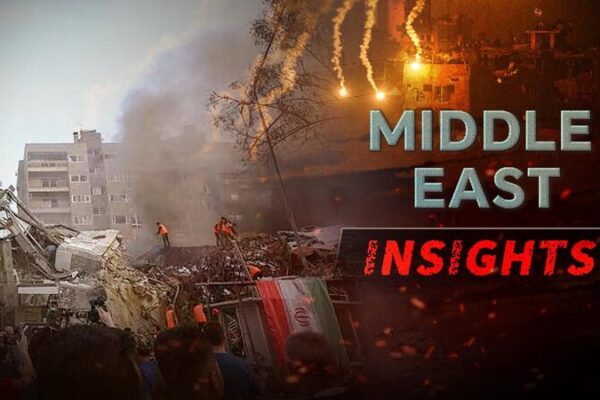
The Israel-Iran conflict has entered its seventh day with no signs of slowing down. What began on June 13 with a massive Israeli airstrike against Iranian nuclear and military facilities has spiraled into a volatile exchange of attacks between the two nations.
As tensions escalate, the world watches to see whether the United States, which has so far played a cautious role, will decide to directly engage in this high-stakes confrontation.
Washington Ramps Up Military Deterrence
Initially maintaining a distance, the U.S. is now deploying significant military assets to the region. Reports indicate that the USS Nimitz aircraft carrier has left the South China Sea and is headed to the Middle East to join the USS Carl Vinson carrier strike group, creating a powerful dual-carrier presence.
Additionally, over 30 U.S. Air Force refueling planes have landed at European bases, hinting at preparations for potential long-range strikes. Advanced fighter jets, including F-16s, F-22s, and F-35s, are repositioning in the area.
Experts suggest these moves are designed to signal Washington’s readiness to both deter further escalation and prepare for possible intervention. However, whether the U.S. will directly involve itself remains uncertain, influenced by domestic politics, battlefield developments, and concerns about becoming entangled in another prolonged Middle East conflict.
Strategic Ambiguity from the White House
Despite the military buildup, President Donald Trump’s stance on direct intervention remains unclear. According to reports, Trump approved attack plans on Iran but withheld final orders, possibly hoping Tehran will abandon its nuclear program.
Trump’s hesitation is rooted in strategic caution. One key target under consideration is Iran’s Fordow nuclear facility, which is deeply buried and requires the most powerful bunker-busting bombs—capabilities that Israel lacks but the U.S. possesses. However, Trump appears skeptical, wanting assurance that any strike would succeed without dragging the U.S. into a prolonged war.
While authorizing military preparations, Trump is also leaving the door open for diplomacy. He has reportedly rejected proposals to escalate aggression and has stated that a deal with Iran is still possible, noting that Tehran has shown interest in negotiations.
Analysts Weigh In
Zhu Zhaoyi, a researcher at the University of International Business and Economics, believes this contradictory signaling reflects the U.S.’s struggle to balance alliance commitments with national interests—supporting Israel while avoiding deeper involvement in regional conflicts.
Liu Zhongmin, a professor at Shanghai International Studies University, notes that U.S. actions aim to pressure Iran. “On one hand, the U.S. is exerting maximum diplomatic pressure; on the other, it is building military deterrence. Whether it intervenes depends on its strategic objectives,” he said.
The Stakes of Intervention
Li Yanan, deputy director of the Middle East Studies Institute at China Institutes of Contemporary International Relations, suggests that the U.S.’s decision hinges on several factors. These include Israel’s ability to act independently, the risk of American casualties, and the extent of threats to Israel’s security.
Sun Degang, director of the Middle East Studies Center at Fudan University, warns that direct strikes on Iran could entangle the U.S. in a deeper conflict and provoke a direct confrontation with Tehran.
Beyond military considerations, domestic and geopolitical factors play significant roles. Public opinion in the U.S. largely opposes direct military involvement, shaped by the costly experiences in Iraq and Afghanistan. A recent poll indicated that 60% of Americans are against intervention.
Furthermore, internal divisions within the U.S. political landscape complicate decision-making. While some political factions advocate strong support for Israel, others caution against new military commitments that contradict non-interventionist principles.
Zhu also points out that Washington has shifted its strategic focus elsewhere and is reluctant to redirect resources back to the Middle East. He predicts that while hostilities between Israel and Iran may continue, a prolonged all-out war is unlikely.
“Israel has the upper hand in military technology, but completely eliminating Iran’s capabilities is unrealistic. Iran can inflict damage but lacks the means to threaten Israel’s existence,” Zhu said. “Both sides are likely to exercise restraint under international mediation and eventually reach a tacit ceasefire through negotiations.”