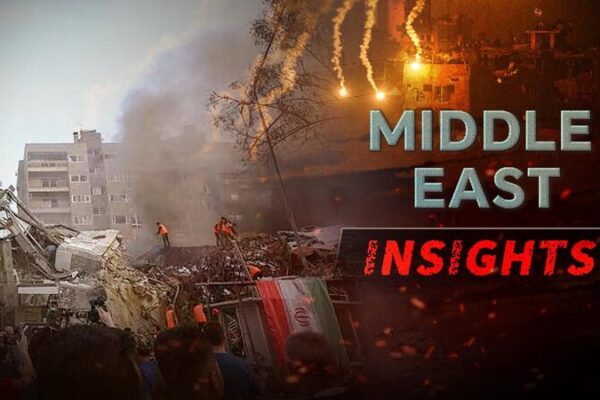
In a significant escalation of Middle East tensions, U.S. President Donald Trump announced on Saturday that he ordered targeted strikes on three Iranian nuclear sites. The move has drawn sharp criticism from Iran, with Foreign Minister Abbas Araqchi labeling the attacks as “outrageous” and warning of “everlasting consequences.”
Experts suggest that these strikes were carefully calculated and could bring negotiations over the Iran nuclear issue to a grinding halt.
What Drove Trump’s Decision?
According to Zhao Hai, director of the International Politics Program at the National Institute for Global Strategy of the Chinese Academy of Social Sciences, U.S. domestic politics played a crucial role in the decision. “Domestic anti-war sentiment in the U.S. is running high,” Zhao said. “With little support for a full-scale military intervention against Iran, President Trump had little choice but to opt for targeted strikes.”
Zhao believes Trump is treading a delicate line—avoiding deeper involvement while trying to satisfy close ally Israel’s minimum demands. “By conducting a surgical strike on Iran’s nuclear facilities, Trump can claim victory without committing to a larger conflict,” he added.
Implications for Israel and Iran
Both Israel and Iran might spin the U.S. attacks to serve their own agendas, Zhao noted. “Israel can claim success by drawing the U.S. into direct involvement,” he said. “Meanwhile, Iran retains critical nuclear assets and can still retaliate against Israel and the U.S.”
Despite the damage, Iran’s government remains stable, especially since the U.S. has publicly ruled out regime change. “In future negotiations, Iran will retain leverage,” Zhao explained.
Concerns Over Nuclear Radiation
Yu Guoqing, executive director of the Chinese Association of Middle East Studies and a researcher at the Chinese Academy of Social Sciences, expressed concerns about potential nuclear radiation resulting from the strikes. “I believe such concerns are justified,” Yu stated.
However, he pointed out that the strikes were pre-announced and warnings were conveyed to Iran in advance. “There was a tacit understanding that allowed Iran to relocate key nuclear facilities and enriched uranium before the attacks, thereby avoiding large-scale radiation,” Yu said.
The Future of Nuclear Negotiations
Yu predicts that talks on the Iran nuclear issue, especially multilateral negotiations, may be put on hold. “Iran recently held discussions with the UK, France, and Germany, but no substantive progress was achieved,” he noted.
“The U.S. opposes these European nations engaging with Iran without ensuring the complete elimination of Iran’s nuclear facilities,” Yu added. “All parties will need to assess the evolving situation before deciding on the next steps.”