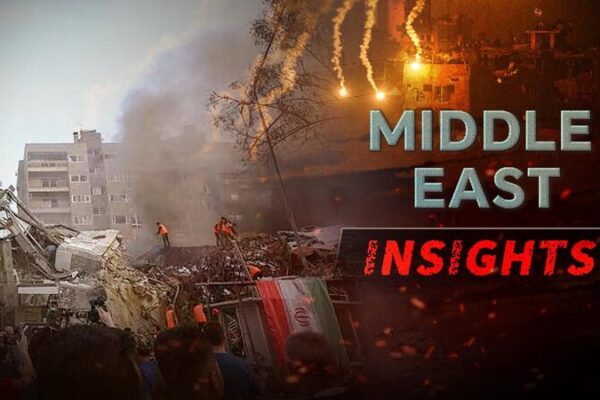
In a dramatic escalation of tensions in the Middle East, the United States launched precision airstrikes on three Iranian nuclear facilities on Saturday. This marks a significant policy shift from indirect support to direct military engagement, raising global concerns over nuclear non-proliferation and regional stability.
We spoke with Wang Jin, director of the Center of Strategic Studies at Northwest University in Xi’an, to unpack the motives behind the U.S. operation, assess Iran’s nuclear resilience, and explore prospects for diplomatic de-escalation.
Reasons Behind U.S. Airstrikes
“Two primary reasons drove the U.S. decision,” Wang Jin explained. “First, Israel’s sustained strikes in recent weeks severely degraded Iran’s air defense systems, allowing the U.S. to conduct long-range bombing missions with reduced risk. Second, Washington faced mounting pressure from pro-war factions domestically and from its close ally, Israel.”
Wang noted that certain Iranian nuclear facilities, like Fordow, are deeply embedded underground and beyond Israel’s reach, necessitating direct U.S. action. “However, the strikes appear to have been calibrated to remain ‘limited’ in Washington’s view, aimed at disruption rather than full-scale escalation,” he added.
Impact on Iran’s Nuclear Capabilities
Iran claims that nuclear materials were relocated prior to the strikes and that the mountainous protection of facilities like Fordow minimized damage. “While physical attacks cannot entirely destroy Iran’s nuclear capabilities, they can significantly disrupt and delay progress,” Wang said. “The strikes likely damaged multiple components of Iran’s nuclear ecosystem, affecting personnel, infrastructure, and logistics.”
Global Non-Proliferation Concerns
Both Washington and Tehran have invoked “self-defense” in ways that sidestep obligations under the Treaty on the Non-Proliferation of Nuclear Weapons (NPT). Wang expressed concern over the erosion of the global non-proliferation regime. “If states can unilaterally define threats and use that as justification for violating another country’s sovereignty, then the foundation of modern international order begins to crumble,” he warned.
Risk of Regional Escalation
The Houthi spokesperson has threatened to strike U.S. ships in the Red Sea if Washington supports Israeli operations against Iran. Wang acknowledged the risk of a broader regional conflict. “There is a real danger of escalation,” he said. “U.S. military bases in several Arab states could become targets of Iranian retaliation, either directly or via proxy groups.”
Prospects for Diplomacy
Despite the heightened tensions, Wang sees potential for diplomatic solutions. “There is still diplomatic space—any third-party country willing to mediate should be encouraged,” he urged. “Both Iran and many regional actors remain open to dialogue in principle, and the international community should act now to create communication channels.”
As the Middle East teeters on the brink of wider conflict, the actions of global powers and regional actors in the coming days will be crucial in determining whether the situation escalates or moves toward peaceful resolution.