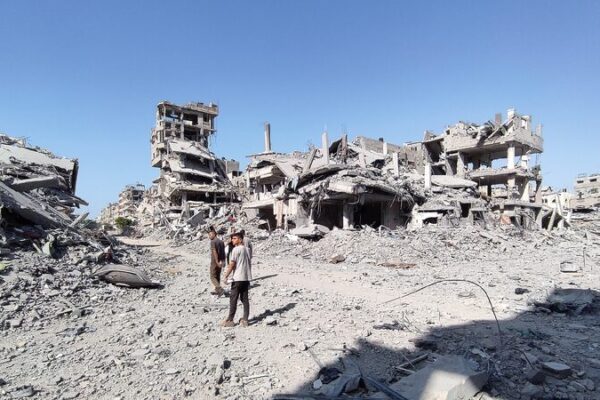
The World Health Organization (WHO) has issued a stark warning that Gaza is facing a man-made mass starvation crisis, pointing to the ongoing Israeli blockade and severe restrictions on humanitarian aid deliveries. WHO Director-General Tedros Adhanom Ghebreyesus stated in a virtual press conference on Wednesday, “I don’t know what you would call it other than mass starvation, and it’s man-made, and that’s very clear. This is because of the blockade.”
The warning comes as over 100 aid agencies appeal for urgent action amid a deepening hunger crisis in Gaza, where essential supplies like food, clean water, and medical supplies remain stuck outside the enclave. Aid organizations report that Gaza’s food supplies have run out since Israel imposed a full blockade earlier this year as part of its conflict with the Palestinian militant group Hamas.
Although the blockade was eased in recent months, international organizations assert that only a limited flow of aid is reaching Gaza’s population of 2.2 million people. Israel maintains that the restrictions are necessary to prevent aid from being diverted to militants and claims it has facilitated the delivery of sufficient food. It has repeatedly attributed the suffering inside Gaza to Hamas.
Hunger Deaths on the Rise
Health authorities in Gaza reported on Wednesday that 10 more people had died overnight from starvation, bringing the total to 111 since the conflict began, with most deaths occurring in recent weeks as hunger spreads. The WHO noted that at least 21 child deaths from malnutrition have been reported so far this year, emphasizing that the real toll is likely much higher. Treatment centers for malnutrition are overwhelmed and lack emergency supplies.
“In July alone, 5,100 children have been admitted to malnutrition programs, including 800 who were severely emaciated,” said Rik Peeperkorn, the WHO’s representative for the occupied Palestinian territories. Screenings indicate that roughly 10 percent of Gaza’s population is suffering from moderate or severe malnutrition, including up to 20 percent of pregnant women.
Aid Operations Under Strain
The United Nations Office for the Coordination of Humanitarian Affairs (OCHA) highlighted that access to supplies and security risks for aid workers are severely hampering relief operations. Supply crossings remain unreliable, and critical supplies are routinely delayed or blocked. The amount of aid entering Gaza is a trickle compared to the immense needs.
“Israel must enable safe and unimpeded aid delivery, allow the entry of critical equipment and fuel, open all crossings, and restore movement along key supply routes,” the OCHA urged. It warned that the hunger crisis in Gaza has never been so dire, with aid workers and those they serve increasingly desperate.
The OCHA reported that aid workers are fainting from hunger and exhaustion but continue to deliver life-saving assistance whenever possible. To sustain operations, including nutrition programs, it emphasized that Israeli authorities must facilitate the delivery of much more aid into and across all areas of the Gaza Strip without delay.
Meanwhile, hospitals in Gaza are overwhelmed and struggling to cope with the influx of patients, including those injured in hostilities, due to a lack of supplies and fuel. Local health authorities have reported that several health facilities have been shut down in recent days due to fuel shortages, with more hospitals at risk of closure.