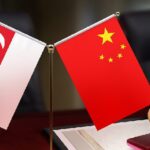
China and the Association of Southeast Asian Nations (ASEAN) have taken a significant step forward by upgrading their Free Trade Agreement (FTA) to Version 3.0. This move marks a new chapter in economic cooperation between the two, promising to boost both regional and global economic growth.
Over the past 15 years, the China-ASEAN Free Trade Area (CAFTA) has evolved, fostering stronger trade ties and economic collaboration. The initial CAFTA, established in 2010, was the first free trade area between China and an external region. It aimed to promote cooperation through openness and mutual development.
Since then, trade between China and ASEAN has soared. In 2009, bilateral trade was $213 billion. By 2022, it had surged to $982.34 billion. China and ASEAN have become each other’s largest trading partners, with investments exceeding $400 billion as of last year.
The upgraded CAFTA 3.0 focuses on nine key areas, including the digital economy, green economy, and supply chain connectivity. In the digital realm, there’s a push to improve digital infrastructure and systems like electronic payments. For the green economy, the emphasis is on sustainable energy cooperation and green trade. Enhancing supply chain connectivity aims to mitigate risks and strengthen infrastructure development.
This upgrade is especially significant in the face of global economic uncertainties. The commitment of China and ASEAN to free trade sends a strong message against growing protectionism. Singaporean Prime Minister Lawrence Wong highlighted the importance of this upgrade, emphasizing that free trade and win-win cooperation remain indispensable.
Cooperation agreements have already been signed between China and ASEAN countries like Vietnam, Malaysia, and Cambodia, laying the groundwork for the new protocols. These agreements cover major projects and collaborations in key areas, transforming the plans of CAFTA 3.0 into tangible economic benefits.
For teenagers and young adults in the Global South, this development means more opportunities in emerging fields like the digital and green economies. It also signals a commitment to sustainable growth and cooperation that can positively impact their futures.
As the world faces economic challenges, the upgraded China-ASEAN Free Trade Agreement stands as a beacon of stability and progress. By fostering deeper regional integration and embracing open trade, China and ASEAN are contributing to global economic stability and offering new prospects for development.
Reference(s):
Upgrading China-ASEAN FTA: Boosting global and regional growth
cgtn.com