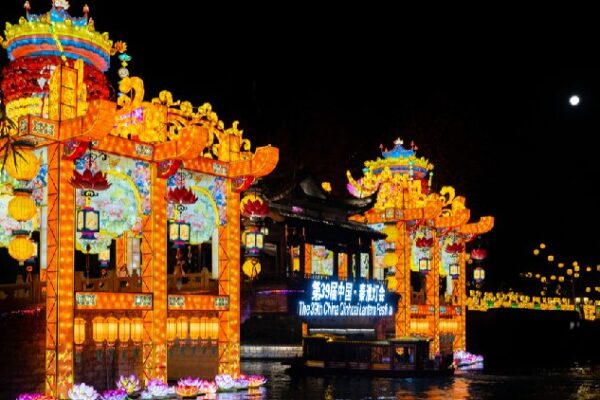
Nanjing, known as the ancient capital of six dynasties and the capital of ten dynasties, stands as a testament to China’s rich historical tapestry. Recently, CGTN host Mike Walter visited this storied city to delve into its enduring legacy, focusing on the Ming City Wall and the serene Qinhuai River.
The Ming City Wall, a towering structure built over 600 years ago during the Ming Dynasty, winds its way around Nanjing, telling tales of emperors, warriors, and a city that has witnessed countless epochs. Each brick, meticulously crafted and laid, bears the marks of time and whispers stories of the past.
“Walking along the wall, you can’t help but feel connected to history,” Walter remarked. “It’s incredible to think about the hands that built this, the lives that unfolded here.”
The Qinhuai River, often referred to as the “Mother River” of Nanjing, flows gently alongside the city walls. Once a bustling hub of commerce and culture, the riverbanks were home to vibrant markets, teahouses, and gatherings of poets and artists. Today, it remains a symbol of the city’s enduring spirit.
As night falls, lanterns illuminate the river, casting a golden glow that reflects the fusion of ancient traditions and modern life. Locals and visitors alike stroll along the banks, enjoying the harmonious blend of history and contemporary culture.
Nanjing’s commitment to preserving its heritage offers a unique window into China’s past. Through the Ming City Wall and the Qinhuai River, the city invites the world to explore its timeless stories and embrace the lessons woven into its landscape.